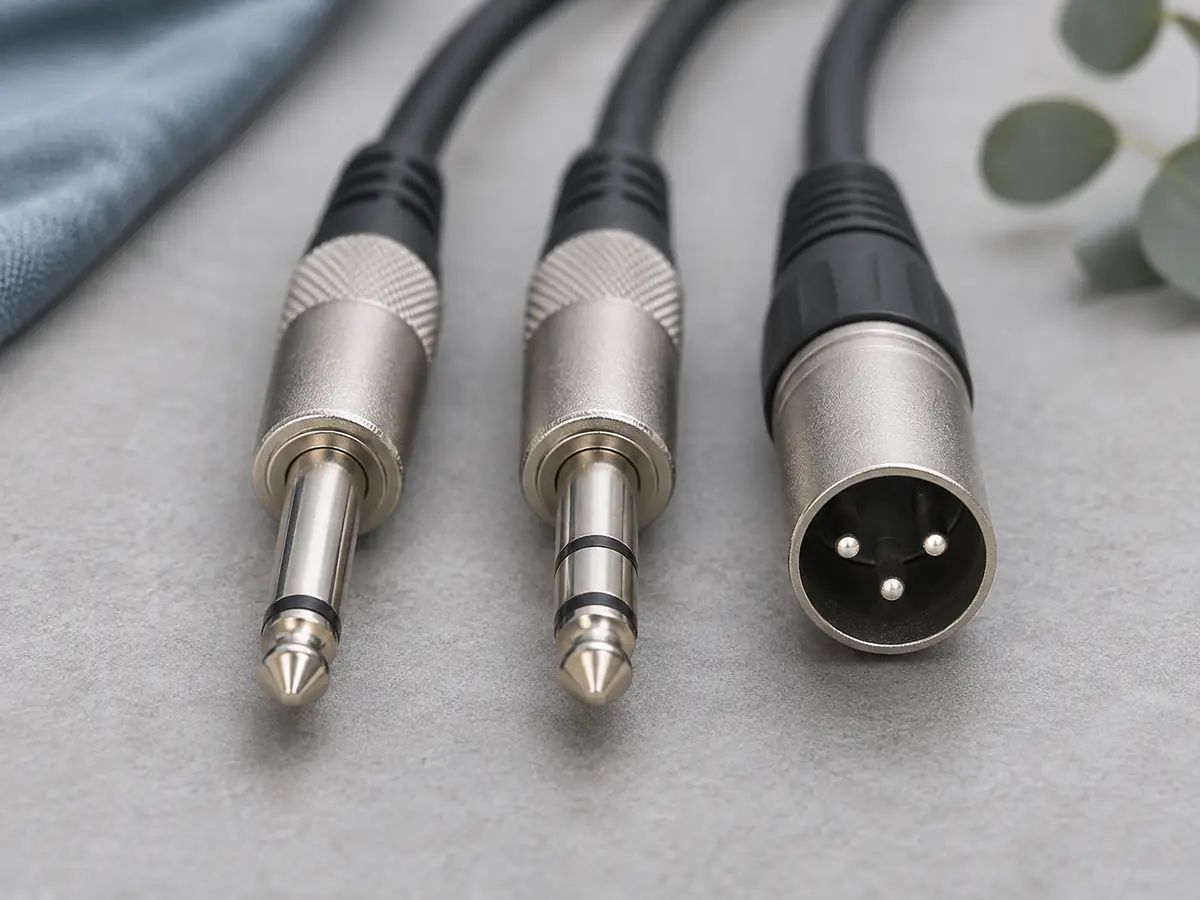
Key facts
| Fact | Details |
|---|---|
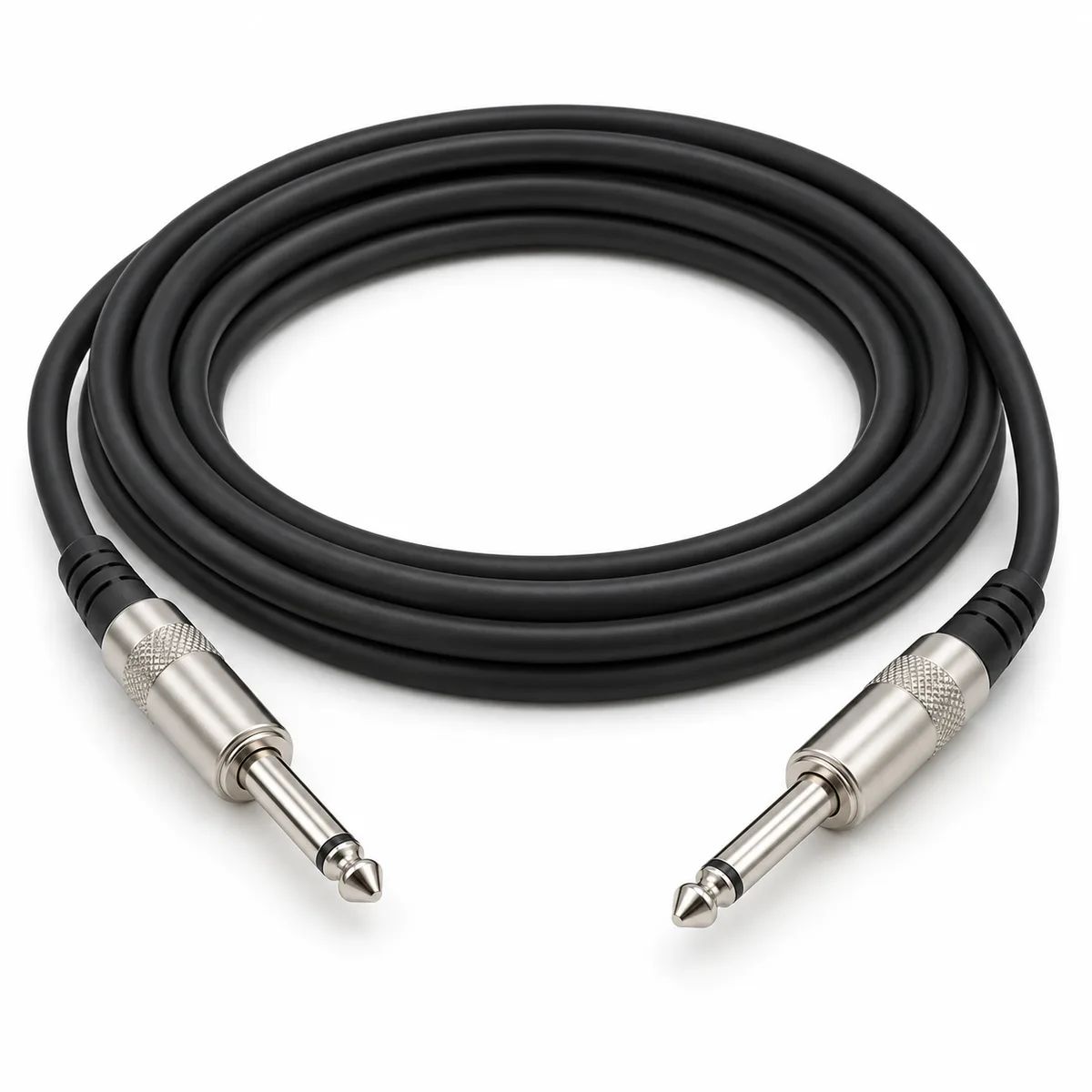
| TS (tip-sleeve) | 2 conductors; mono, unbalanced; standard for guitar and bass |
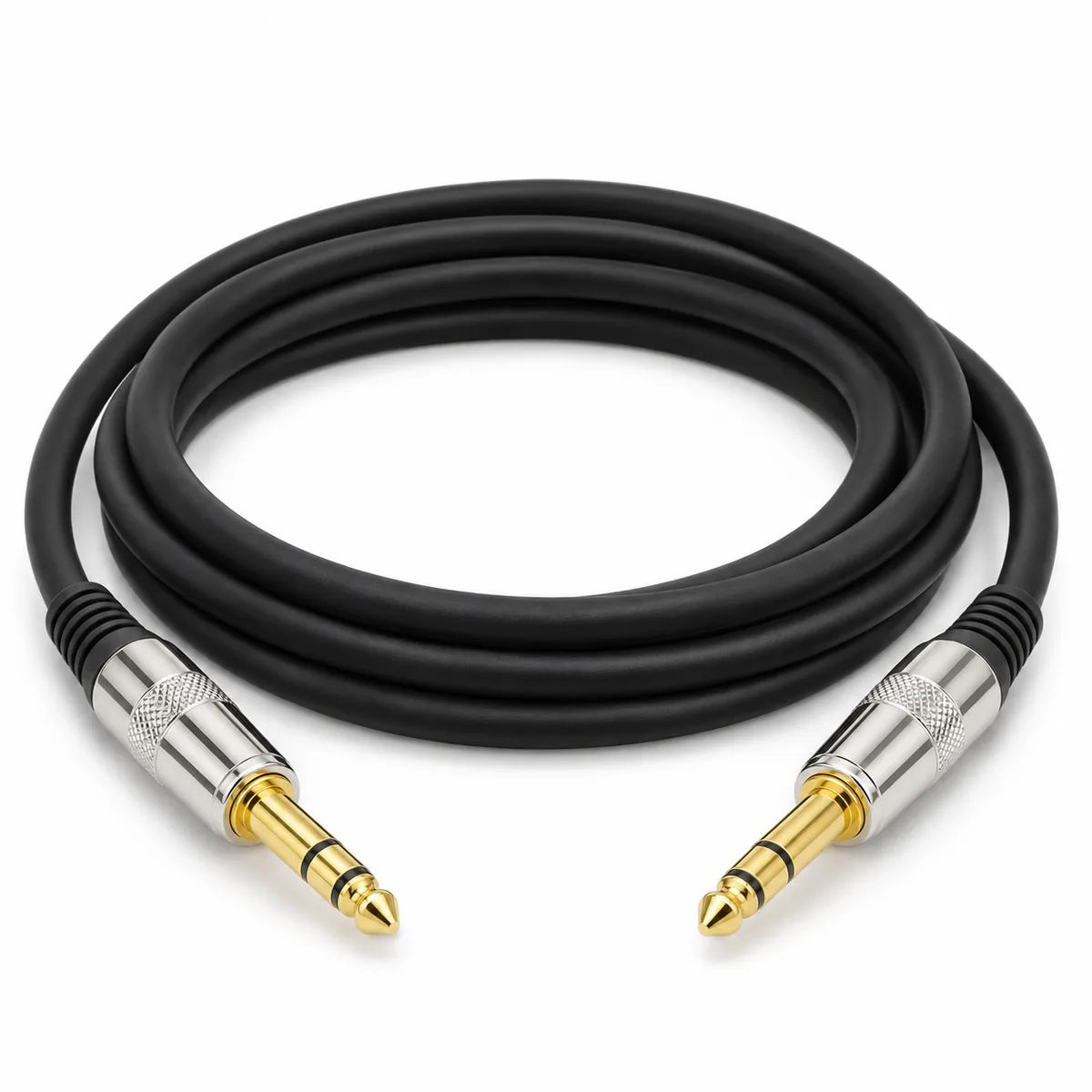
| TRS (tip-ring-sleeve) | 3 conductors; balanced mono or unbalanced stereo, depending on the equipment |
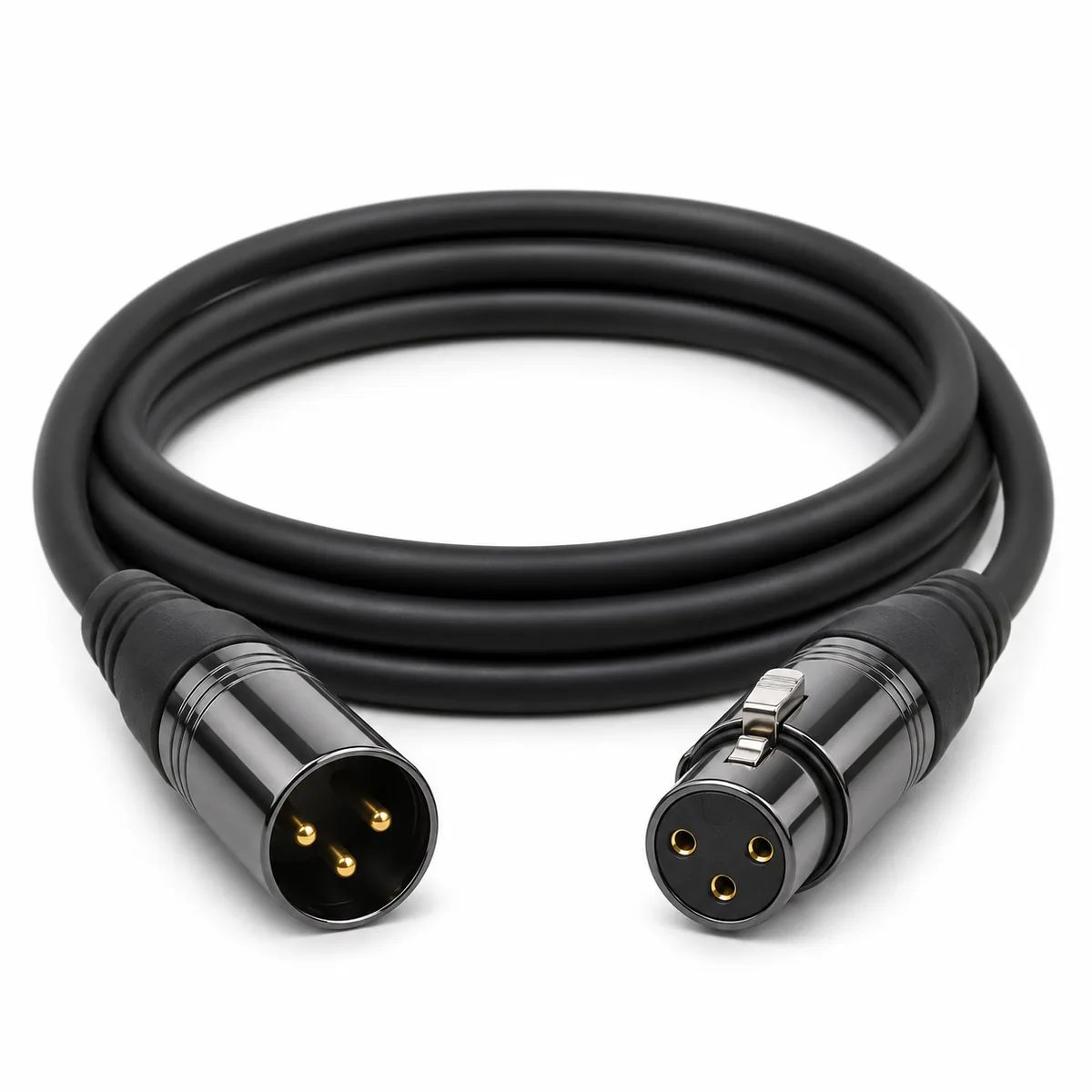
| XLR (3-pin) | 3 conductors; locking; pin 1 shield, pin 2 hot (+), pin 3 cold (−) per AES14 |
| What makes a line balanced | Matched impedances on both signal wires plus a differential input, not the cable alone |
| Phantom power | +48 V phantom power is supplied over XLR microphone lines; TS and 3.5 mm inputs do not supply it |
| Consumer vs pro line level | −10 dBV (about 0.316 V RMS) vs +4 dBu (about 1.228 V RMS), roughly 12 dB apart |
What is the difference between TS, TRS and XLR?
The difference is the number of conductors and how the equipment at each end uses them. The plug shape only tells you what the cable can carry. The jacks on the gear decide what it does carry.
| Aspect | TS | TRS | XLR (3-pin) |
|---|---|---|---|
| Common plug sizes | 1/4" (6.35 mm), 3.5 mm | 1/4" (6.35 mm), 3.5 mm | Full-size XLR |
| Conductors | 2 (tip + sleeve) | 3 (tip + ring + sleeve) | 3 (pins 1, 2, 3) |
| Typical signal | Mono, unbalanced | Balanced mono, or unbalanced stereo | Balanced mono |
| Typical uses | Guitar, bass, keyboards, effects pedals, unbalanced line outputs | Studio monitors, audio interfaces, mixer line I/O, headphones (stereo), insert points | Microphones, mixer and stage-box I/O, studio monitors, long line runs |
| Locking | No | No | Yes (latch on female connector) |
| Carries phantom power | No | No | Yes, on microphone inputs that supply it |
| Noise rejection over long runs | Lowest | High when wired and used as balanced | High |
A 1/4" TS plug and a 1/4" TRS plug look almost the same. Count the black insulating rings on the plug: one ring means TS, two rings mean TRS.
What does "balanced" actually mean?
A balanced line has two signal conductors whose impedances to ground are matched, and a receiver that amplifies only the difference between them. Interference that reaches both conductors equally (common-mode noise) is canceled at the input. The shield, the third conductor, carries no audio signal.
Three parts work together:
- Equipment output. The output must drive two conductors with matched source impedances. Many outputs also send an inverted copy of the signal on the cold leg, but the impedance match is what matters for noise rejection.
- Cable. A twisted pair keeps both conductors close together, so they pick up nearly identical interference. The shield intercepts electric-field noise and drains it to ground.
- Equipment input. A differential input subtracts one conductor from the other. Noise present on both cancels; the wanted signal remains.
The practical consequence: a cable cannot make a signal balanced by itself. A balanced TRS or XLR cable between two unbalanced devices is still an unbalanced connection. Bill Whitlock's AES paper on balanced lines (see Sources) explains why impedance balance, not signal symmetry, decides how well a line rejects noise.
When is an unbalanced TS cable the right choice?
TS is the correct cable whenever the equipment has unbalanced, mono jacks. That covers most electric guitars and basses, nearly all effects pedals, many keyboards and synthesizers, and older or budget line-level gear.
Passive guitar pickups are a special case. They are high-impedance sources, so the cable's capacitance becomes part of the tone circuit. That is why instrument cables are built and specified differently from line cables. Our guide to instrument cable capacitance explains what the pF per meter figure means.
Long unbalanced runs have two drawbacks: they are more exposed to interference, and with passive pickups every extra meter adds capacitance and reduces treble. Keep passive instrument runs as short as the setup allows. When a long run is unavoidable, convert to a balanced connection, for example through a DI box, close to the instrument.
For stock or private-label lines, see our instrument cables category, including the standard 1/4" TS instrument cable and the braided 1/4" TS instrument cable.
When is a TRS cable balanced, and when is it stereo?
A TRS cable is balanced when both connected jacks are balanced mono inputs or outputs. It is stereo when the jacks are stereo, such as a headphone output. The wiring inside the cable is often identical; the equipment decides.
| Use | Tip | Ring | Sleeve |
|---|---|---|---|
| Balanced mono line (e.g., interface to studio monitor) | Hot (+) | Cold (−) | Shield / ground |
| Unbalanced stereo (e.g., headphones) | Left | Right | Common return |
| Insert send/return (Y-cable to two TS plugs) | Send (on many mixers) | Return (on many mixers) | Common |
On insert points, many mixers use tip for send and ring for return, but this is not universal. Check the mixer or interface manual before ordering insert cables in volume, and label the two TS legs.
For studio and live line connections, the balanced 1/4" TRS to TRS cable is the standard choice; see the full pro interconnect cables range.
How does an XLR cable work, and why do microphones use it?
A 3-pin XLR cable carries one balanced signal: pin 1 is the shield, pin 2 is hot (+), and pin 3 is cold (−). This pin assignment is set out in AES14, the AES standard for XLR-type polarity and gender, which is based on IEC 60268-12.
Microphones use XLR for three practical reasons:
- Low signal level. Microphone signals are small, so noise rejection over long stage and studio runs matters most here.
- Phantom power. Condenser microphones and many active DI boxes draw +48 V phantom power from the mixer or interface. The voltage is applied equally to pins 2 and 3 and returns through pin 1, so pin 1 must be connected at both ends of a microphone cable. A 3.5 mm or TS input cannot supply it.
- Locking. The latch keeps a cable from pulling out on stage.
XLR is also used for line-level connections, such as a mixer output to powered speakers. XLR connectors also appear on DMX lighting cables (the DMX512 standard specifies 5-pin XLR, though 3-pin is common in practice) and on AES3 digital audio cables. Those signals need cable with a specified characteristic impedance: 120 Ω for DMX and 110 Ω for AES3. A standard microphone cable is not a reliable substitute, especially on long runs.
See our XLR microphone cables, starting with the balanced XLR male to female microphone cable.
TRS or XLR: which is better for balanced connections?
Neither is electrically better. Both carry the same balanced signal over three conductors. Choose by the jacks on the equipment and the environment:
- XLR where cables are stepped on, pulled, or moved often (stage, rental, microphones), because it locks.
- TRS where the gear has 1/4" jacks and connections stay put (interfaces, monitors, patch points).
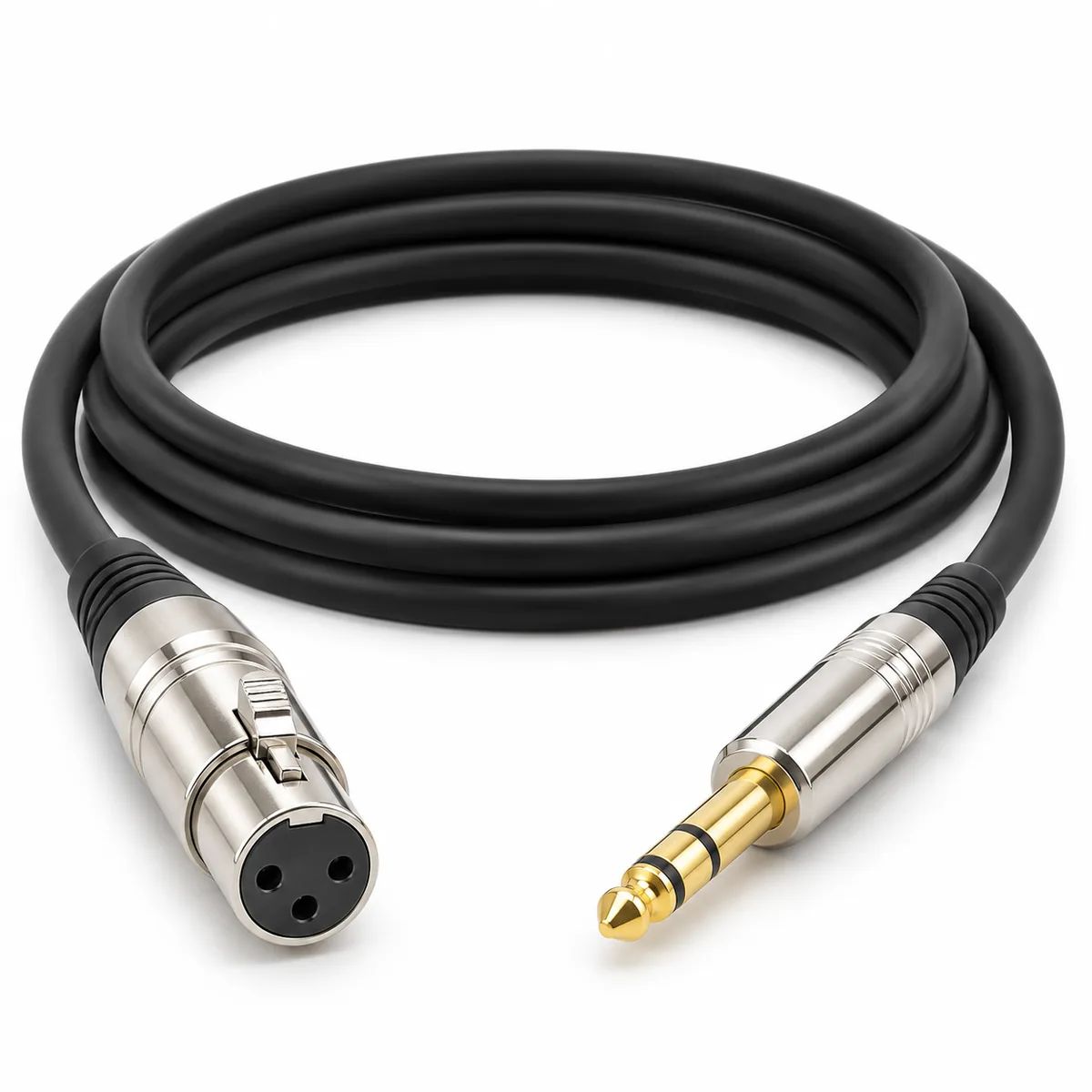
- XLR to TRS where one end has each, for example an XLR mixer output into a 1/4" TRS line input.
What happens when you mix balanced and unbalanced equipment?
Usually it works, but the connection becomes unbalanced and loses its noise rejection. Two things to check:
- Wiring. A TS plug in a balanced TRS jack connects the ring (cold) contact to the sleeve (ground). Many electronically balanced outputs tolerate this, but some output stages and transformer outputs need specific wiring. Rane's Sound System Interconnection note gives recommended wiring for each case.
- Level. Professional balanced gear typically runs at +4 dBu; consumer unbalanced gear at −10 dBV. The gap is about 12 dB (11.8 dB), so one device may sound too quiet or overload the other. Some balanced-to-unbalanced wiring schemes also lose 6 dB of signal level, which the Rane note says to compensate by turning the system up.
A balanced connection reduces hum from ground loops, but it cannot guarantee to remove it. Ground loops often originate in equipment grounding, not in the cable.
Can a TS instrument cable be used as a speaker cable?
No. Some amplifiers and cabinets use 1/4" jacks, but a speaker cable is unshielded with heavy conductors built to carry amplifier power. An instrument cable has a thin, shielded conductor built for small signals. An instrument cable used between an amplifier and a speaker can overheat and may put the amplifier at risk; a speaker cable used for an instrument has no shield and picks up noise. Label the two clearly, especially in mixed retail displays.
Which cables should a music store or audio brand stock?
Match the cable to the job your customers do most often. This is a starting assortment, not a fixed rule.
| Customer job | Cable | Example product |
|---|---|---|
| Guitar or bass to amp or pedalboard | 1/4" TS to TS instrument cable | standard-instrument-cable-1-4-inch-ts, braided-instrument-cable-1-4-inch-ts |
| Microphone to mixer or interface | XLR male to XLR female | balanced-xlr-microphone-cable |
| Microphone to a 1/4" balanced input | XLR female to 1/4" TRS | xlr-female-to-1-4-inch-trs-cable |
| Interface or mixer to studio monitor | 1/4" TRS to TRS, or XLR male to 1/4" TRS | balanced-trs-cable-1-4-inch, xlr-male-to-1-4-inch-trs-cable |
Building a private-label cable range for your store or studio? Tell us which jobs your customers buy cables for, and we will suggest a starting assortment and confirm options in writing. Start a private-label request
Frequently asked questions
Can I use a TRS cable for my guitar?
Yes. A mono guitar jack has no ring contact, so the plug's ring is usually left unconnected and the cable behaves like a TS cable. It gives no extra noise rejection, because the guitar output is unbalanced. A TS instrument cable is the standard choice.
Is XLR better than TRS?
Not electrically. Both carry a balanced signal on three conductors. XLR locks and passes phantom power to microphones; TRS fits the 1/4" jacks found on interfaces, monitors and patch points. Choose by the jacks on your equipment.
Can a TS cable carry a balanced signal?
No. A balanced signal needs two signal conductors plus a shield. A TS cable has only one signal conductor and a shield, so any connection made with it is unbalanced.
Does a balanced cable stop hum?
It reduces noise that both signal wires pick up equally, including much ground-loop noise. It cannot guarantee to remove hum, because many hum problems start in equipment grounding rather than in the cable.
Why does my XLR-to-3.5 mm adapter not power my condenser microphone?
A 3.5 mm camera or recorder input does not supply +48 V phantom power, and the cable cannot add it. Use a dynamic microphone, a self-powered microphone, or an interface that provides phantom power.
Planning your own cable line? Send us the connectors, lengths and packaging you need. Request an OEM quote