| Fact | Details |
|---|---|
| OEM | Built to the buyer's spec or drawing; the buyer defines the product |
| ODM | Based on a supplier's existing design, adapted for the buyer; the design usually stays with the supplier |
| Private label | An existing product sold under the buyer's brand; changes are mostly cosmetic |
| Fastest to market | Private label, then ODM, then OEM (relative, not fixed timelines) |
| Most control over the product | OEM |
| A caution | Suppliers use these terms inconsistently, so confirm the meaning in writing |
Why do these terms cause confusion?
OEM, ODM, and private label are used loosely, and the same word can mean different things to different suppliers. "OEM" originally described the company that makes a product that another company sells under its own name. In sourcing conversations today, many suppliers use "OEM" for any order with the buyer's logo on it.
That is why the label matters less than the details. For every project, confirm three things in writing: who owns the design, what exactly you can change, and whether anyone else can buy the same product.
What is an OEM audio cable?
An OEM audio cable is built to the buyer's own specification or drawing. You decide the cable construction, connectors, wiring, length, and finish, and the supplier builds to that definition.
Typical OEM cable projects include:
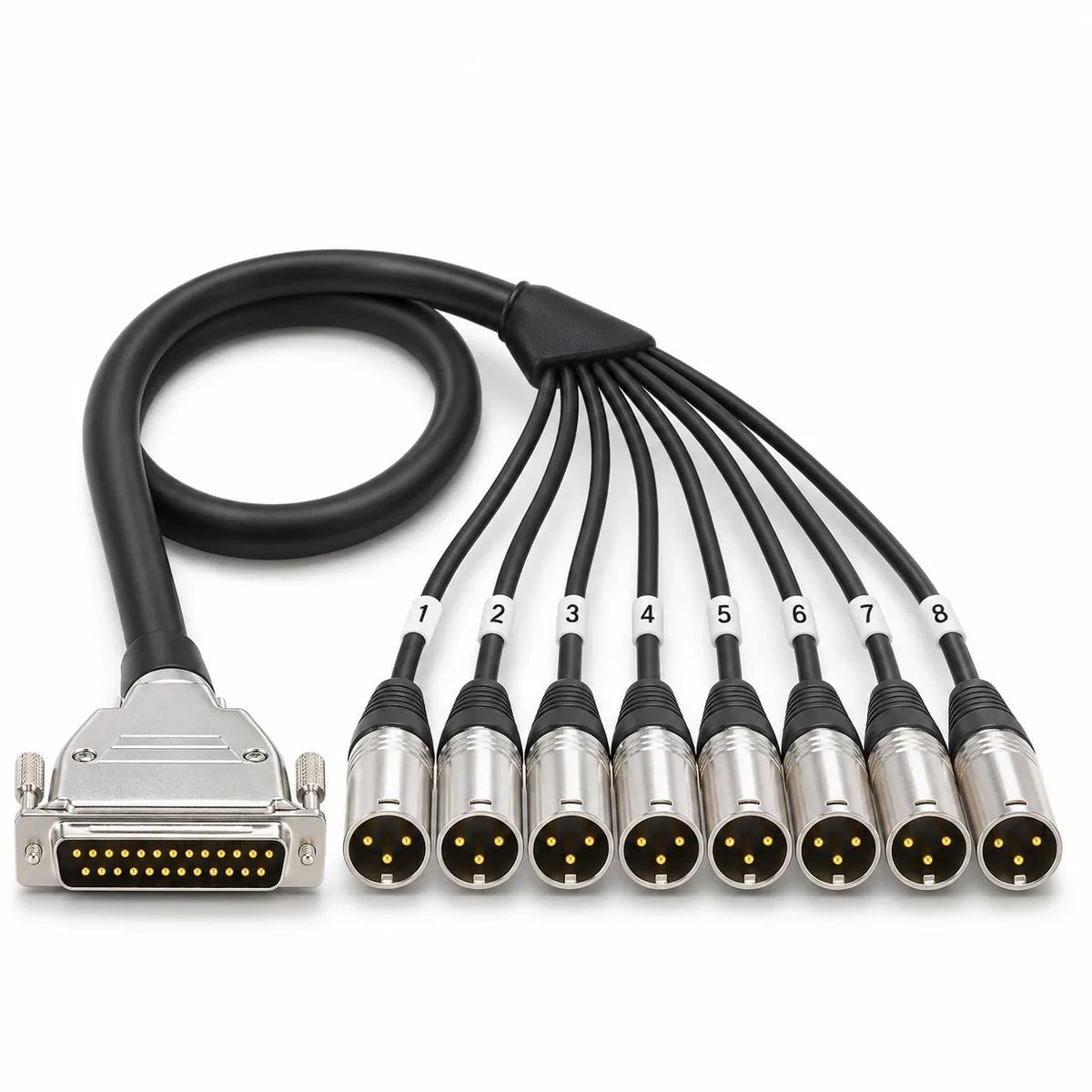
- A multicore snake or DB25 breakout cable built to your pinout, channel labels, and lengths
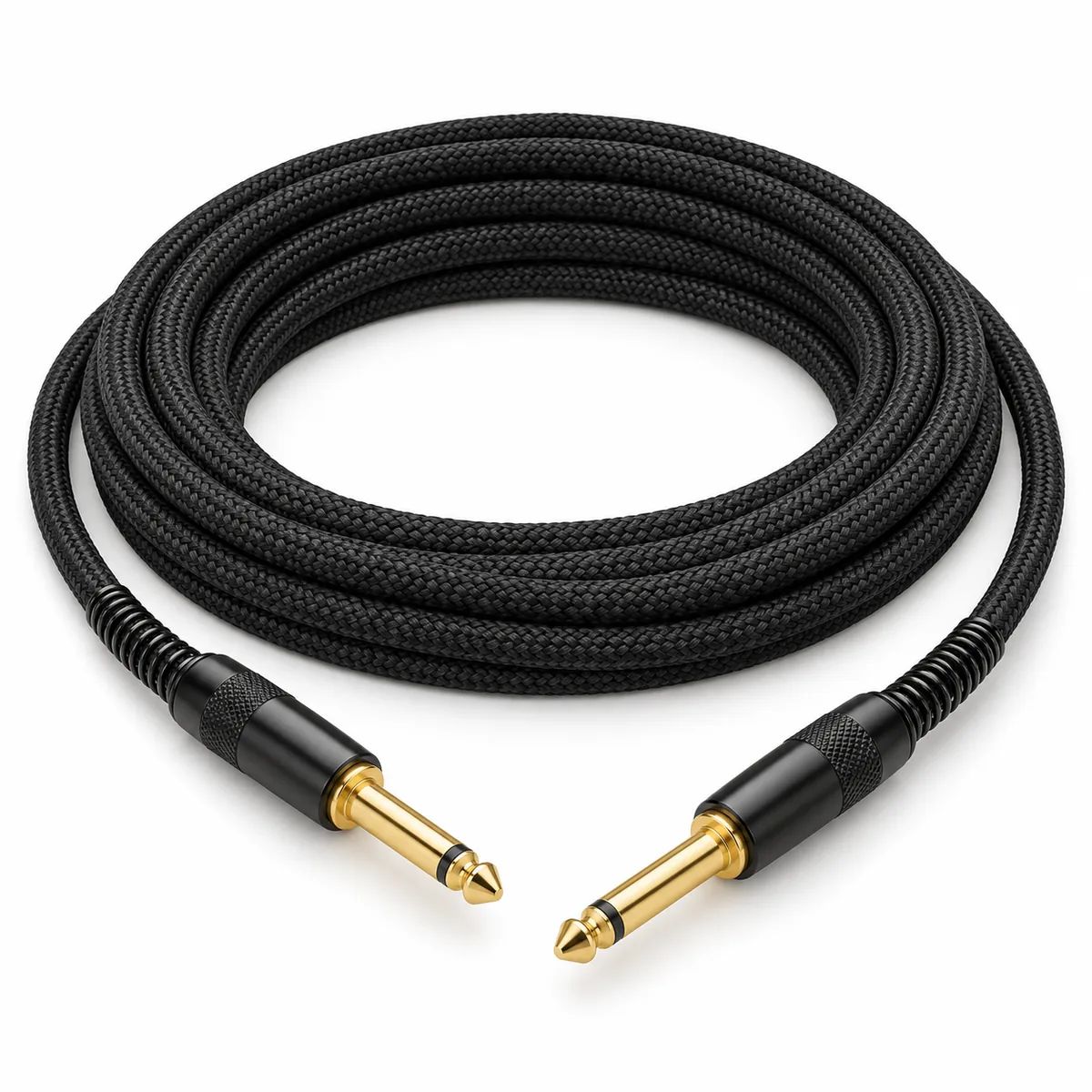
- An instrument cable with a specified conductor, shield, jacket compound, and connector combination
- A cable assembly for your own product, built to your drawing
OEM gives you the most control and makes your product harder for competitors to copy exactly. It also needs the most input from you: a complete spec sheet, more sample rounds, and sometimes tooling for custom parts.
What is an ODM audio cable?
An ODM audio cable starts from a design the supplier or its manufacturer has already developed. You choose options, adjust details, and add your branding, but the underlying design usually belongs to the supplier.
Typical ODM cable projects include:
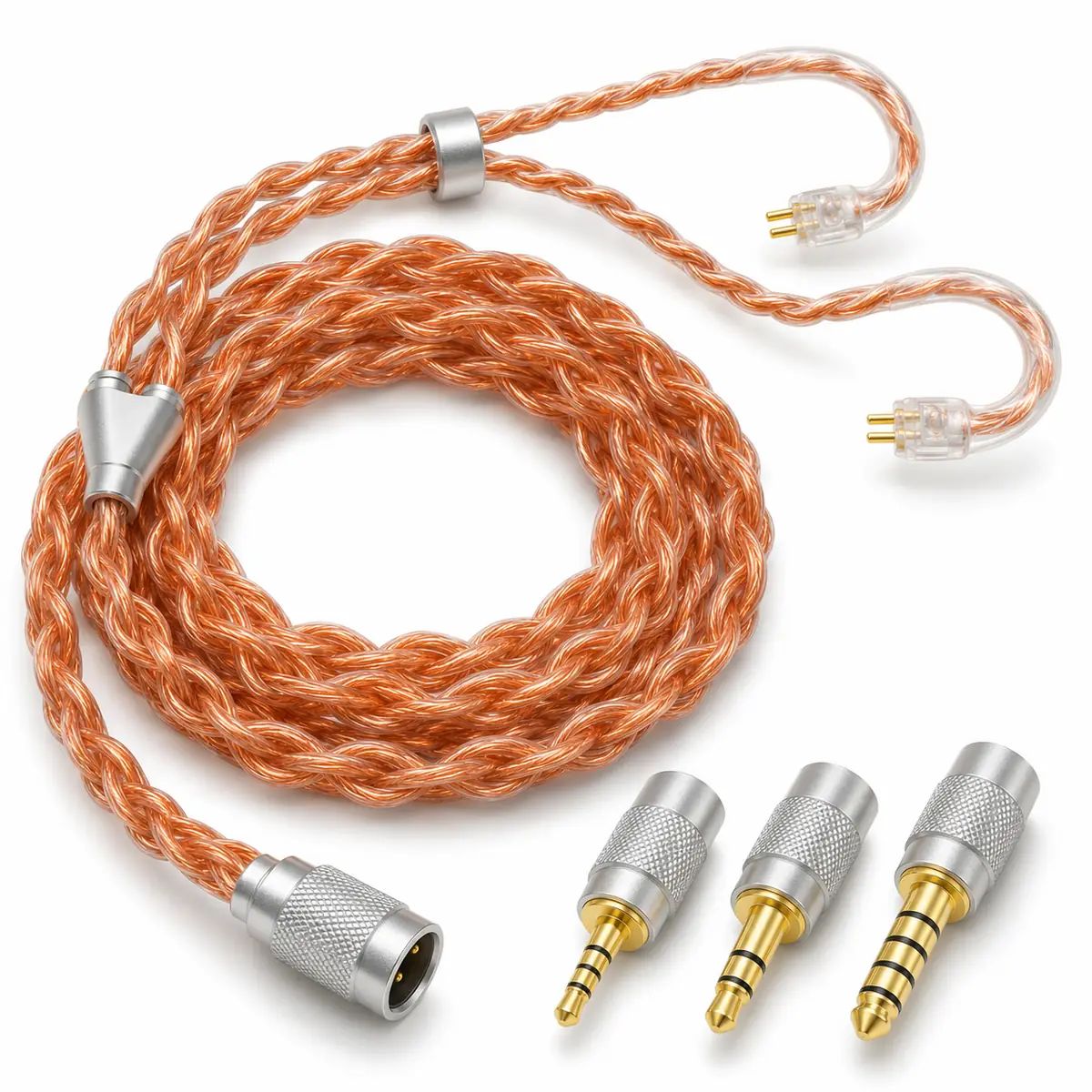
- A modular headphone cable with interchangeable plugs, where you choose the plug set, braid color, and packaging (see our modular headphone upgrade cable)
- A cable with a supplier-developed connector housing, finished in your colors with your logo
ODM saves development time because the design has already been made and tested by its owner. The trade-off is exclusivity: unless you agree otherwise, the same base design can be sold to other brands. If exclusivity matters, ask for it in writing, along with its scope, duration, and any volume conditions.
What is a private-label audio cable?
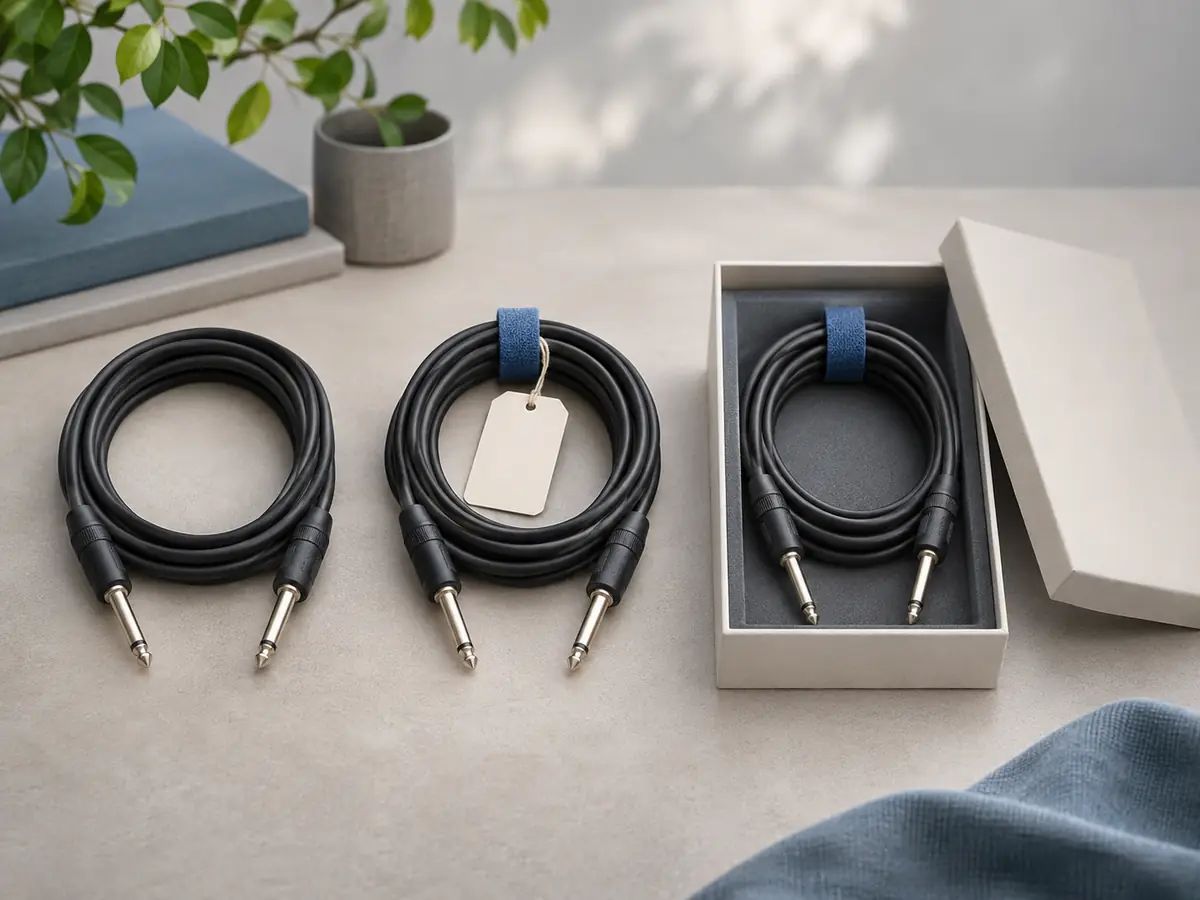
A private-label audio cable is an existing product sold under your brand. Changes are usually limited to the logo, colors from existing options, and packaging. The construction stays the same.
Typical private-label cable projects include:
- A braided instrument cable with your logo on the plugs and your printed header card
- A store-brand XLR cable range for a music retailer, in stock colors with custom packaging
Private label is the fastest and simplest way to launch. It is also the easiest for competitors to match, so brands usually compete on presentation, range, service, and price rather than construction. For a detailed launch checklist, see Starting Your Own Guitar Cable Brand.
OEM vs ODM vs private label: side-by-side comparison
| Factor | OEM | ODM | Private label |
|---|---|---|---|
| Who defines the product | You (spec or drawing) | Supplier's base design, adjusted by you | Supplier's existing product |
| What you can change | Construction, connectors, wiring, length, finish, packaging | Options within the base design, plus branding and packaging | Logo, colors from existing options, packaging |
| Design ownership | Your specification, if agreed in writing; agree separately who owns any tooling | Usually the supplier or its manufacturer | Usually the supplier or its manufacturer; your brand and artwork stay yours |
| Exclusivity | Built for you; protect it with an agreement | Not exclusive unless agreed | Generally not exclusive |
| Input needed from you | High: full spec, approvals at each stage | Medium: option choices, branding, approvals | Low: artwork and packaging details |
| Sample rounds | Often several | Usually fewer | Usually one, mainly for logo and packaging |
| Tooling | Possible for custom parts | Possible for custom finishes | Rarely needed |
| What drives minimums | Custom parts and materials | Custom options and finishes | Logo setup and packaging print runs |
| Time to market | Longest | Medium | Shortest |
| Best for | Defined technical needs, installation work, products that must be hard to copy | Brands that want a distinctive product without starting from zero | Testing a market, retail ranges, fast launches |
What do these models mean for time and risk?
Each step away from an existing product adds stages to the project, and each stage adds time and a chance for misunderstanding. The difference is not only in production; most of the extra time sits in specification and sampling.
| Project stage | OEM | ODM | Private label |
|---|---|---|---|
| Specification | Full spec written and agreed | Options selected; changes written down | Artwork and packaging confirmed |
| Development | Possible new parts or tooling | Adaptation of existing design | None |
| Sampling | Functional and cosmetic samples, possibly repeated | Sample of the adapted version | Logo and packaging sample |
| Production | New build; first runs need close checking | Known build with your options | Known build with your branding |
A practical approach for many brands is to start with private label or ODM, learn which products sell, and then move the best sellers to an OEM specification.
How do you protect your design and brand?
Protect your brand by registering your trademark in the markets you sell in, and protect your design by agreeing ownership, confidentiality, and exclusivity in writing before you share detailed drawings. A purchase order alone rarely covers these points.
Points to agree in writing:
- Ownership of the specification, drawings, and any tooling you pay for, including where the tooling is kept and whether it may be used for other customers
- Confidentiality of your designs and pricing, often through a non-disclosure agreement (NDA)
- Exclusivity for ODM designs or custom finishes, with clear scope and duration
- Use of your brand: no sales of products bearing your logo to anyone else, and what happens to leftover branded packaging
- Change notification before any material or component substitution
Trademark registration is handled by national or regional offices, such as the USPTO in the US and EUIPO for the EU. Brands that have products made in another country often also ask their lawyer whether to register the mark there. This article is general information, not legal advice; for tooling, exclusivity, and IP agreements, ask an IP lawyer about your specific situation.
How to choose the right model for your cable line
Choose based on how much of the product you need to own, how fast you need to launch, and how much input you can give.
- Choose private label if you want to test demand quickly, build a retail range, or launch with limited development time.
- Choose ODM if you want a product that looks and feels distinctive, but you do not need to define every part of it.
- Choose OEM if you have specific technical requirements, such as a pinout, a cable construction, or a connector combination, or if you need a product that is hard for competitors to copy.
Many cable ranges combine all three: a private-label core range, a few ODM products with distinctive features, and an OEM item for a specific customer or installation.
How Haisen works with each model
Haisen Audio is a Hong Kong-based OEM and private-label audio cable supplier. We don't own a factory; production is carried out by our manufacturing partners in Guangdong, China. For OEM projects, we turn your requirements into a written specification and coordinate samples and production. For private-label projects, we start from existing products and apply your logo, colors, and packaging. For ODM-style projects, we start from an existing design made by our manufacturing partners and adapt the options, colors, and branding. The base design stays with its owner, so it is not exclusive to you by default. If you need exclusivity for your version, such as a specific colorway or option set, tell us in your inquiry; whether it is possible, and its scope, duration, and any volume conditions, is agreed case by case in writing before you order. If you want an NDA in place before you share drawings, we are happy to sign one first.
See the customization options and process on our OEM and private-label page, or tell us about a private-label range through our private-label inquiry form.
FAQ
What is the difference between OEM and ODM for audio cables?
With OEM, the cable is built to your own specification or drawing, so you define the construction, connectors, and wiring. With ODM, you start from a supplier's existing design and adapt it with options and branding. OEM gives more control; ODM is usually faster, but the base design is often not exclusive.
Is private label the same as white label?
The terms overlap and are often used interchangeably. Both describe an existing product sold under the buyer's brand. Some people use "white label" for a generic product sold to many resellers and "private label" for a product sold to one retailer, but usage varies, so confirm what is meant.
Who owns the design in an ODM cable project?
Usually the supplier or its manufacturer, because the base design existed before your project. You can negotiate exclusivity for your specific version, such as a color, finish, or option set, but agree on its scope and duration in writing before production.
Which model is fastest for launching a cable brand?
Private label is usually fastest, because the product already exists and only the logo, colors, and packaging change. ODM is next. OEM takes longest because the specification, samples, and sometimes tooling are new. Actual timing depends on the product and the customization.
Can I start with private label and move to OEM later?
Yes. Many brands launch with private-label products, learn which items sell, and then define an OEM specification for their best sellers. Keep records of customer feedback and returns from the first runs, since they are the best input for a later OEM spec.
Trademark and IP points in this article are general information, not legal advice.