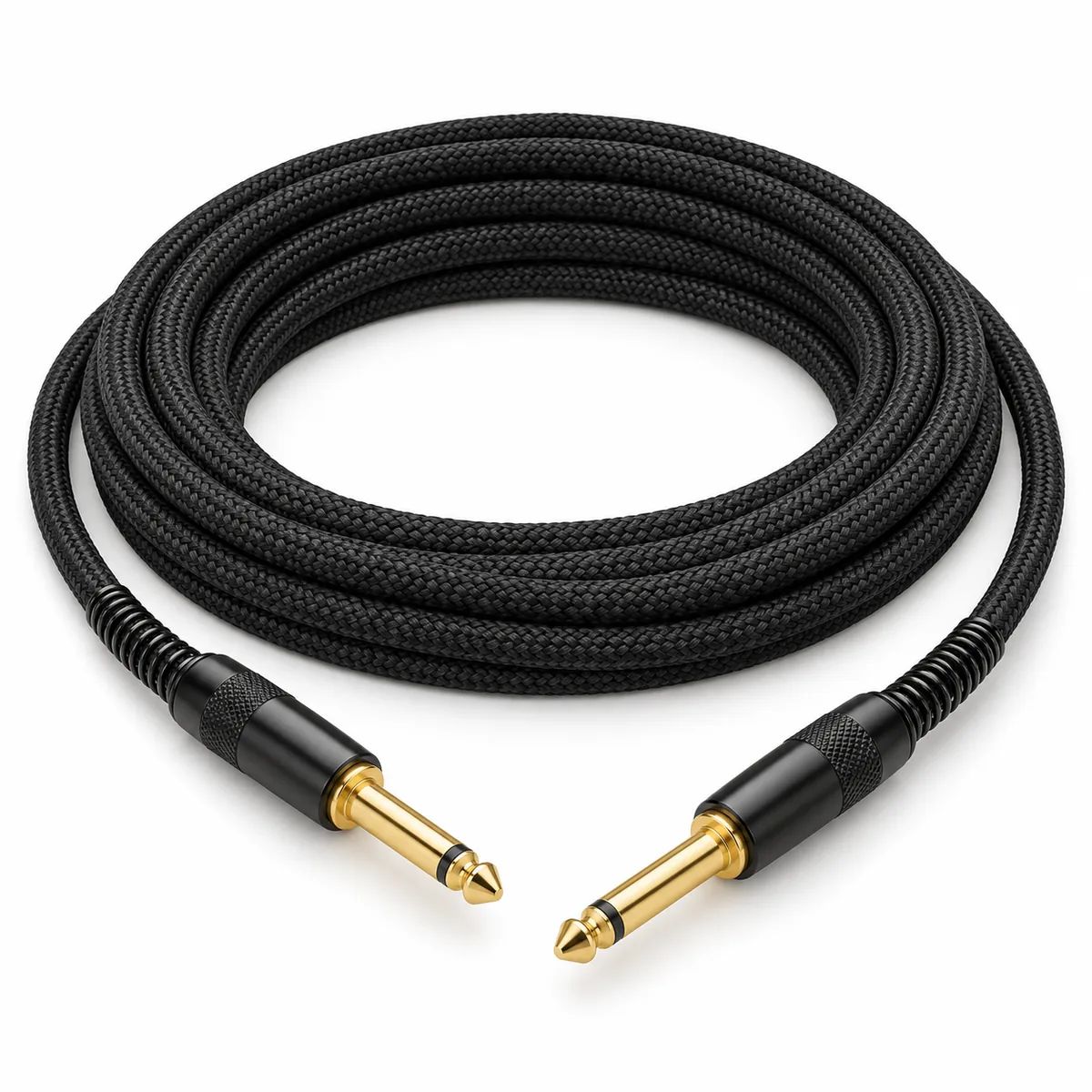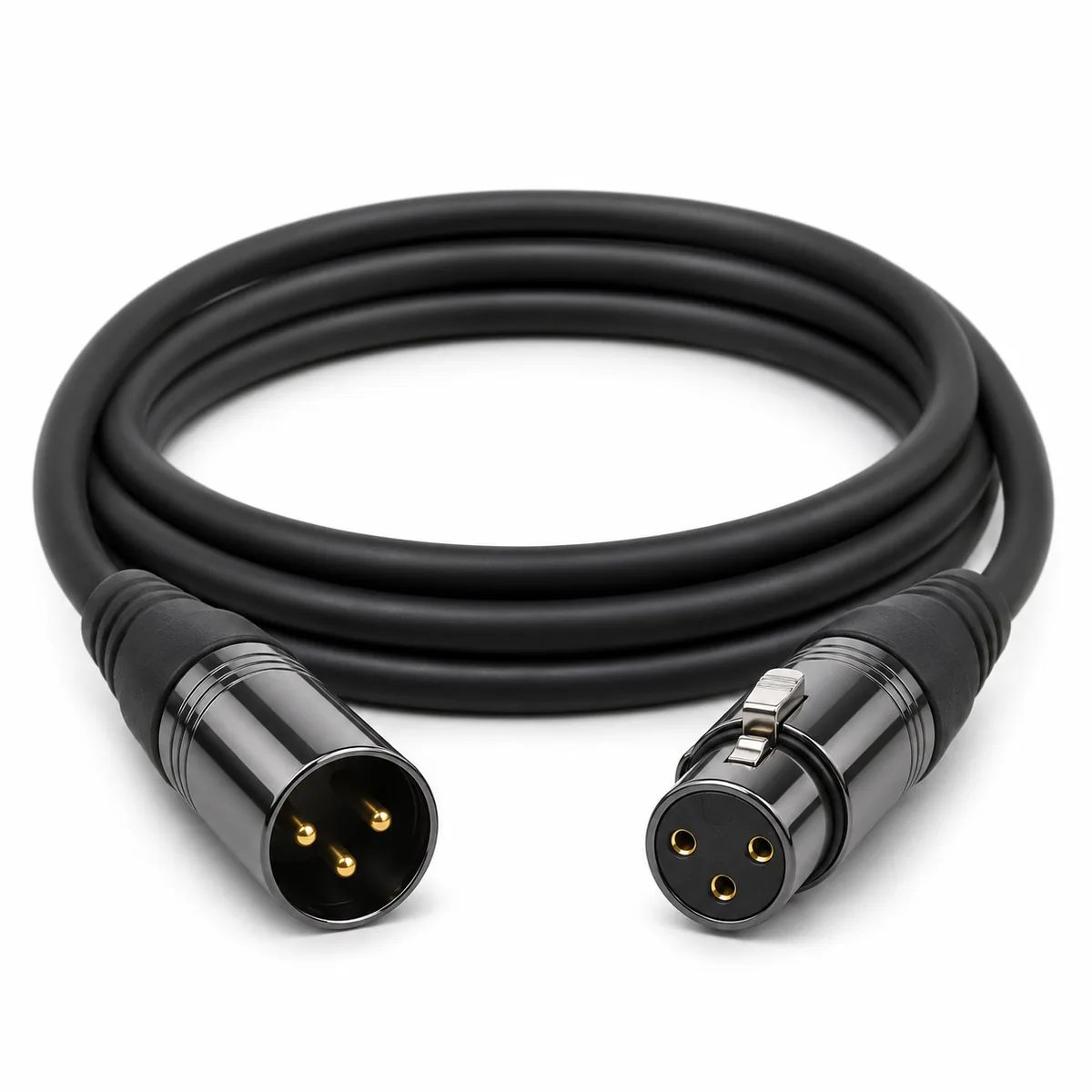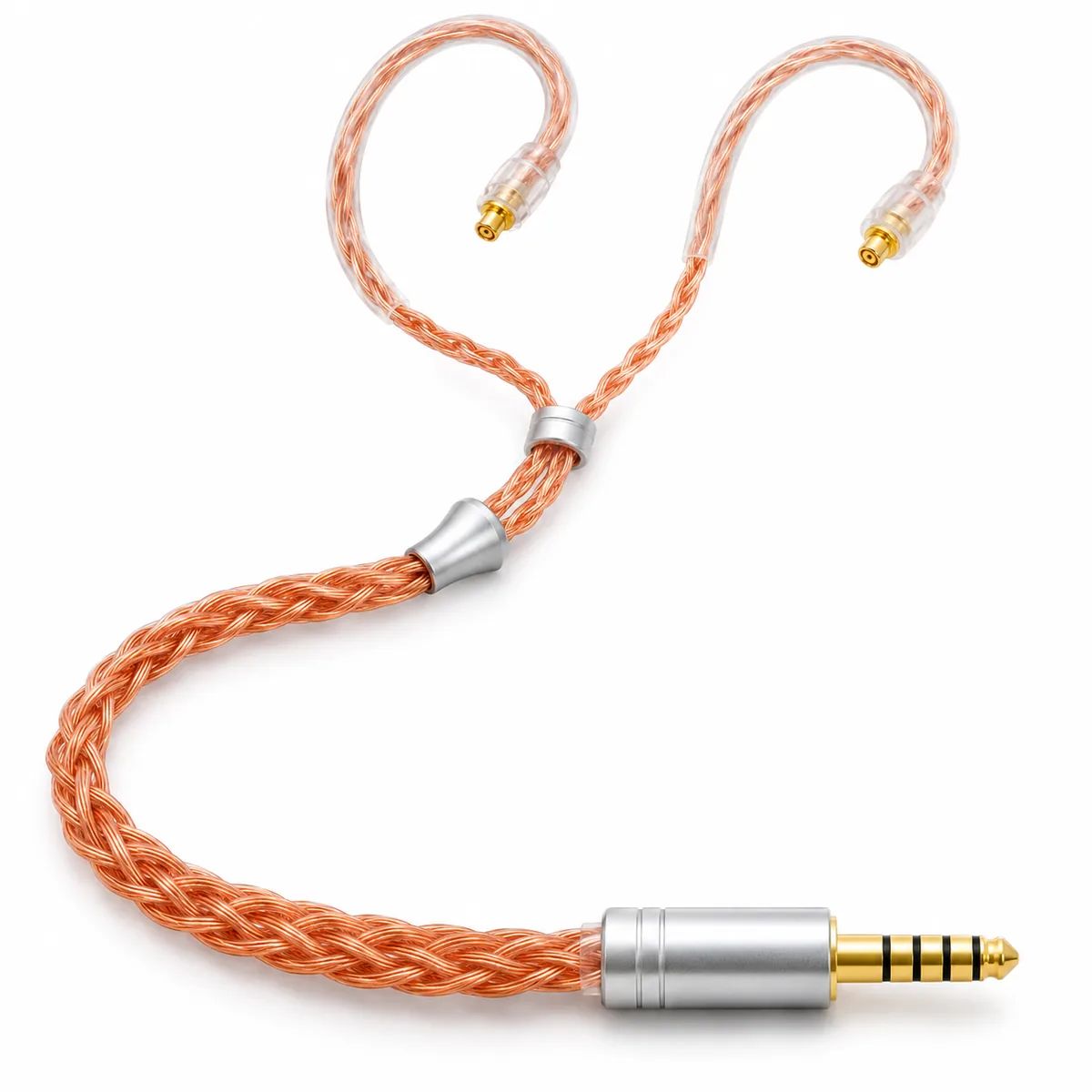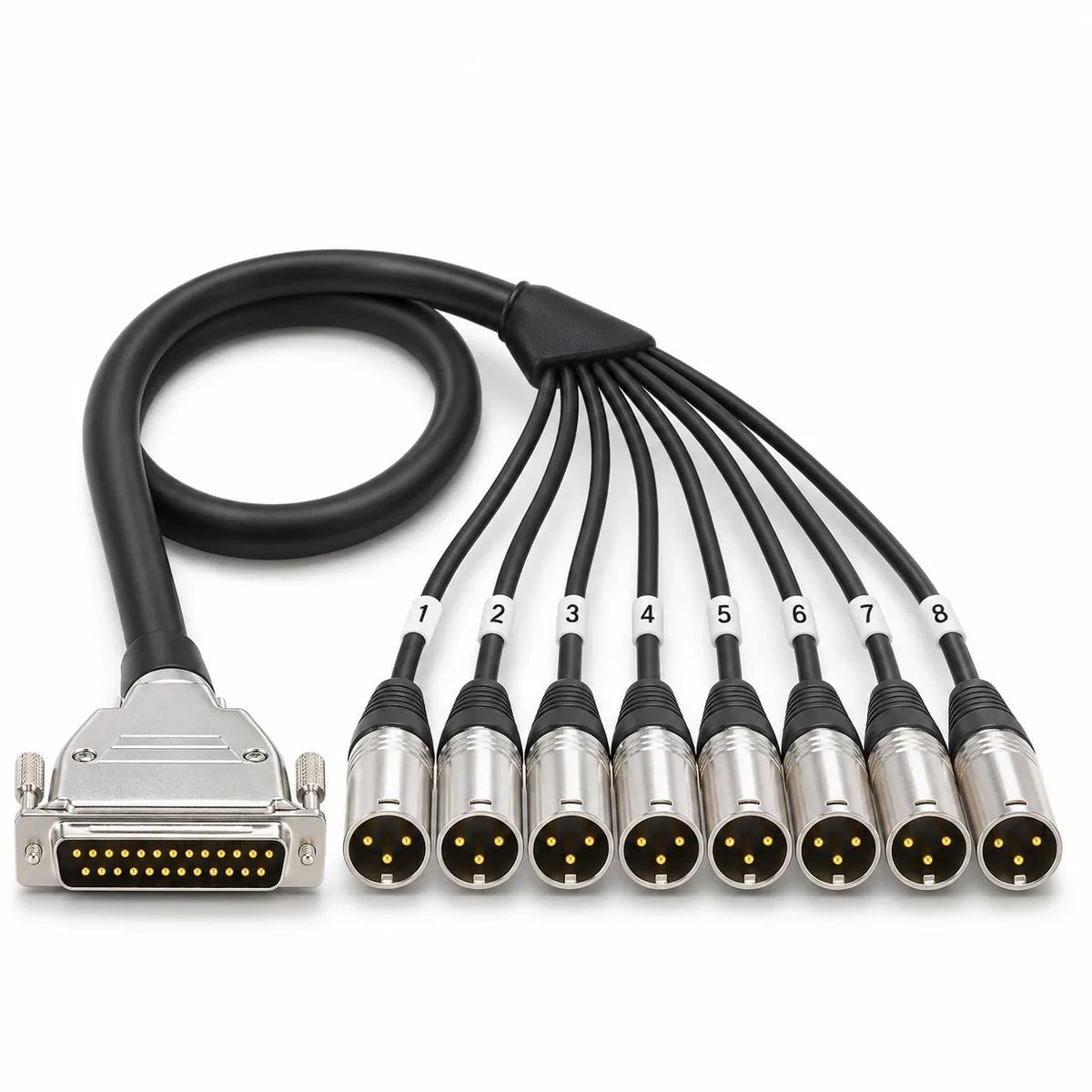
| Fact | Details |
|---|---|
| Who this guide is for | Brands and retailers ordering custom or private-label audio cables for the first time |
| Supplier types | Factories, trading companies or sourcing partners, sourcing agents, and marketplace sellers |
| Documents that prevent disputes | Written spec sheet, itemized quote, signed-off golden sample, purchase contract or proforma invoice |
| Trade terms | Incoterms® 2020 rules (such as FCA, FOB, DAP, and DDP) define where costs and risk pass from seller to buyer |
| Biggest controllable risks | Spec drift between sample and mass production, unclear payment terms, and unplanned import costs |
| Who you will rely on at import | Your freight forwarder and a licensed customs broker in your country |
Why do brands source audio cables from China?
Brands source audio cables from China because the supply base for raw cable, connectors, and cable assembly is broad, and suppliers can handle small custom details such as logos, colors, and packaging. The trade-off is distance: specifications, quality checks, and logistics need more planning than buying locally.
Sourcing well is less about finding the lowest price and more about removing ambiguity. The steps below follow the order in which most custom cable projects run.
Step 1: Define the cable and your target market
Write down what you want before you contact anyone. A one-page spec sheet should cover cable type, connectors, conductor, shielding, jacket, length and tolerance, logo, packaging, and the markets you will sell in.
The target market matters early because it changes the documents you will need. A cable sold to consumers in the EU, for example, needs different paperwork from a cable sold to an installer in the US. If you list your markets in the request for quotation (RFQ), suppliers can tell you which test reports are available.
If you need a structure, our guide to writing a cable spec sheet includes a free template.
Step 2: Choose the type of supplier you want to work with
You can buy custom audio cables from a factory, a trading company or sourcing partner, a sourcing agent, or a marketplace seller. Each works differently on price, minimums, product range, communication, and who is accountable when something goes wrong.
| Supplier type | How it works | Typically suits | Watch for |
|---|---|---|---|
| Factory | Owns production lines and makes the cables | High volume of one cable category; buyers with their own sourcing or QC staff | Higher minimums for custom work; English and technical communication vary |
| Trading company or sourcing partner | Sells you cables made by one or more manufacturers; manages spec, communication, and logistics | Smaller runs across several cable types; buyers without a team in China | Ask who makes the product and who is accountable for quality |
| Sourcing agent | Finds factories and coordinates for a fee or commission; you usually contract with the factory | Buyers who want a direct factory contract but need local help | Check who pays the agent and whether the agent has ties to suppliers |
| Marketplace seller | Lists stock products online, sometimes with light customization | Testing an idea with stock products | Listings may not say who makes the product; custom work is limited |
None of these is better in every case. Our article on choosing between a factory and a sourcing partner covers the trade-offs and the questions to ask each one in detail: Factory or Sourcing Partner?
Step 3: Find and shortlist suppliers
Build a shortlist of three to five suppliers from more than one channel, then check that each company exists, is the business it says it is, and has made products similar to yours.
Common channels include trade shows, B2B platforms, industry referrals, and supplier directories. Whichever channel you use, verify:
- Legal identity. Ask for the company's registration document and check it against the official register where the company is incorporated. Companies registered in Hong Kong, for example, can be searched through the Hong Kong Companies Registry's e-Services Portal. For a company in mainland China, ask for its business license and check the registered name and business scope with the official company register there.
- Business type. Ask directly whether the company is a factory or a trading company. An honest answer either way is a good sign.
- Relevant experience. Ask for photos or samples of comparable cables, not a general catalog.
- Contact consistency. Company name, email domain, invoice, and bank account name should all match.
Step 4: Send a request for quotation and compare quotes on equal terms
Send every shortlisted supplier the same RFQ, then compare quotes line by line. A quote is only comparable when it states the same spec, quantity breaks, one-time costs, sample terms, lead time, trade term, payment terms, and validity date.
Include in your RFQ:
- Your spec sheet and any drawings or pinouts
- Quantities per SKU, plus a likely reorder quantity
- Customization: logo method, colors, packaging, barcodes
- Target markets and the test reports you will need
- Preferred trade term and delivery destination
- Your timeline, including any launch date you must meet
Check each quote for:
| Quote item | What to look for |
|---|---|
| Unit price and price breaks | Prices at each quantity tier, per SKU |
| One-time costs | Tooling, logo setup, printing plates, or sample charges, and whether any are credited against the order |
| Sample terms | Sample cost, quantity, and timing |
| Lead time | Sample and mass production lead times stated separately |
| Trade term | The Incoterms® rule and the named place (for example, "FOB [port]" or "DAP [your address]") |
| Payment terms | Deposit, balance timing, and accepted methods |
| Validity | How long the price holds, especially for copper-based products |
A noticeably low quote usually means something in the spec was interpreted differently. Ask what conductor, shield, and connector the price is based on.
Step 5: Approve samples and sign off a golden sample
Approve a sample against your written spec, then sign off one unit as the golden sample that mass production must match. Keep one golden sample yourself and make sure the supplier keeps an identical one.
For audio cables, check at least length, connector type and finish, continuity and wiring, jacket color, logo position, and packaging. If something changes after the sample, such as a connector source or jacket compound, ask the supplier to tell you in writing before production. See how samples work at Haisen.
Step 6: Agree trade terms and payment terms
Agree on an Incoterms® rule and a payment method in writing before production starts. The Incoterms rule defines where the seller's delivery obligation ends and who pays for and bears the risk of each stage of transport. It does not by itself settle price, payment, or ownership.
Note: The descriptions below are simplified. Incoterms® is a trademark of the International Chamber of Commerce (ICC), and the official ICC text defines each rule. Confirm your contract terms with your freight forwarder or a trade advisor.
| Incoterms® 2020 rule | Seller delivers when… | Main cost and risk on the buyer | Common use for cable orders |
|---|---|---|---|
| EXW (Ex Works) | Goods are made available to the buyer at the seller's premises or another named place, not loaded | Loading, export clearance, all transport, import | Rarely practical for overseas buyers, who must handle export formalities |
| FCA (Free Carrier) | Goods are handed to the carrier or another party nominated by the buyer at a named place, cleared for export | Main transport, insurance, import | Buyers with their own forwarder; works for any transport mode, including containers handed over at a terminal |
| FOB (Free on Board) | Goods are loaded on board the vessel at the named port of shipment, cleared for export | Ocean freight, insurance, import | Sea freight with the buyer's forwarder; ICC guidance notes that FOB may not be appropriate when goods are handed to the carrier before loading, as is common with containers; FCA is the alternative |
| CIF (Cost, Insurance and Freight) | Goods are loaded on board the vessel; seller also pays freight and minimum insurance to the named destination port | Risk during the sea voyage, destination charges, import | Sea freight when the seller arranges shipping |
| DAP (Delivered at Place) | Goods arrive at the named destination, ready for unloading | Unloading, import clearance, duties, and taxes | Courier and small orders delivered to your door |
| DDP (Delivered Duty Paid) | Goods arrive at the named destination, cleared for import, ready for unloading | Unloading | Buyers who want a landed price; the seller handles import clearance and pays import duties and taxes |
Always state the named place with the rule, for example "FCA Hong Kong" or "DAP [your warehouse address]". The rule alone does not say where delivery happens.
On payment, a deposit before production with the balance due before shipment is common for custom orders. Letters of credit are sometimes used for larger orders. Whatever you agree, follow two rules:
- The bank account name must match the company you contracted with. Be cautious if you are asked to pay a personal account or a company with a different name.
- Treat any email that changes bank details as suspicious. Confirm by phone or video using contact details you already hold, before you send any money.
At Haisen, we ship DAP by express courier as standard, and offer FOB Shenzhen, FOB Hong Kong, or FCA Hong Kong for freight orders with your own forwarder. DDP to the United States is quoted separately on request. We do not offer EXW or DDP to the EU. Payments go only to an account in the name of Haisen Innovations Limited, and we will never change our bank details by email. See our FAQ for details.
Step 7: Follow production and check goods before shipment
Ask for production updates at agreed milestones and arrange a check of finished goods against the golden sample before you pay the balance. Checks after the balance is paid give you much less leverage.
A pre-shipment check for audio cables typically covers:
- Quantity, SKU mix, and carton marks
- Visual defects on jackets, plugs, and logos
- Length against the stated tolerance
- Continuity, shorts, and wiring (pinout) on a sample of units
- Packaging, barcodes, and printed text
Many buyers use acceptance sampling based on an acceptance quality limit (AQL), which sets how many units are inspected and how many defects are acceptable for a given lot size. Agree on the inspection level and AQL values in writing. Independent inspection companies can perform the check for a fee if you want a third party involved.
On Haisen orders, every bulk order is checked before shipment by Haisen staff or a third-party inspector we appoint, using AQL sampling, and we send you the inspection report and photos. You can also book your own third-party inspection company at your cost; tell us when you order so we can schedule it.
Step 8: Plan shipping, customs, and import costs
Before you confirm the order, ask your freight forwarder and customs broker for a landed-cost estimate: freight, insurance, duties, taxes, broker fees, and delivery. Import rules and duty rates change, so base your retail pricing on a current estimate, not on a past shipment.
Points to raise with your broker:
- Tariff classification. Customs authorities classify goods using codes based on the Harmonized System (HS). Insulated audio cables, with or without connectors, are often classified under HS heading 8544, but the correct national code depends on the product and must be confirmed by your broker or the customs authority. Cables with built-in electronics may be classified differently.
- Duties and additional tariffs. Some countries apply additional duties to goods of certain origins, and these measures have changed frequently. Ask for the current position for your product and origin.
- Origin marking. Many markets require imported goods to be marked with their country of origin. In the US, the general rule is set out in 19 CFR Part 134. Goods made in mainland China generally remain of Chinese origin even when they are sold by a Hong Kong company or shipped from Hong Kong; confirm the marking with your broker.
- Low-value shipment rules. Rules for low-value parcels have changed in several markets, including the US and the EU. Do not assume a small shipment is duty-free.
- Who handles import clearance. Under DDP, the seller is responsible for import clearance and for paying import duties and taxes. Under other terms, you or your broker usually handle import clearance as the importer.
Step 9: Keep reorders consistent
Keep a version-controlled spec sheet, the golden sample, and the approved packaging files, and reference all three on every reorder. Ask suppliers to notify you in writing before changing any material or component.
Consistency problems on reorders usually start with an undocumented substitution, such as a different connector source or jacket compound. A short change-notification clause in your purchase terms helps prevent this.
Common sourcing mistakes and how to avoid them
| Mistake | What happens | How to avoid it |
|---|---|---|
| Ordering from a photo instead of a spec | The sample looks right but is built differently from what you expected | Send a written spec with every RFQ |
| Comparing quotes with different terms | The cheapest quote turns out to be the most expensive landed | Compare price, one-time costs, trade term, and lead time line by line |
| No golden sample | Disputes over color, length, or fit cannot be settled | Sign off and store a golden sample on both sides |
| Paying the balance before any check | Defects are found after you have lost leverage | Check goods against the golden sample before the balance is paid |
| Printing claims you cannot prove | Retailers or regulators ask for documents you do not have | Print only claims confirmed in writing on your order or backed by a test report |
| Ignoring import costs | Margins disappear after duties and fees | Get a landed-cost estimate before setting retail prices |
Where Haisen fits
Haisen Audio is a Hong Kong-based OEM and private-label audio cable supplier. We don't own a factory; production is carried out by our manufacturing partners in Guangdong, China. We turn your requirements into a written specification, coordinate samples and production, and act as your single point of contact from quote to shipment. Haisen Innovations Limited is the seller on your quote and proforma invoice, receives your payment, and is accountable to you for delivery and quality. Learn more about how we work or see our OEM process, from brief to shipment.
If you are unsure whether you need an OEM build, an ODM design, or a private-label product, read OEM vs ODM vs Private Label Audio Cables.
FAQ
How do I find a reliable audio cable supplier in China?
Shortlist three to five suppliers from more than one channel, such as trade shows, B2B platforms, and referrals. Verify each company's registration, ask whether it is a factory or a trading company, request comparable samples, and send all of them the same written RFQ so their quotes can be compared fairly.
What should a custom audio cable RFQ include?
Include a spec sheet (cable type, connectors, conductor, shielding, jacket, length and tolerance), quantities per SKU, customization details such as logo and packaging, your target markets, your preferred trade term and destination, and your timeline. The more complete the RFQ, the more comparable the quotes you receive.
Which Incoterms rule is best for a first cable order?
There is no single best rule. Small orders shipped by courier often use DAP, where the seller delivers to your door and you handle import duties. Buyers with their own forwarder often use FCA or FOB. Choose the rule that matches who will arrange transport and import clearance.
Should I hire a third-party inspection company?
It is worth considering for a first order or any order where you cannot check goods yourself. An independent inspector checks finished goods against your spec and golden sample before shipment, using an agreed sampling plan. Agree on the inspection scope and acceptance criteria with your supplier in advance.
How do I estimate import duties on audio cables?
Ask a licensed customs broker in your country to classify the product and estimate duties, taxes, and fees for its origin. Duty rates and additional tariffs change, so request a current estimate before you set retail prices instead of relying on an earlier shipment.
Trade and customs summaries in this article are general information, not legal or customs advice; the official texts below prevail.